
event:decision
  • Home
  • Our Products
    • Track
    • Impact
    • Navigator
    • Evolve
  • About Us
    • Our Company
    • Clients
  • Resources
    • Quiz
    • Blog
    • Most Sustainable Agencies
  • Contact Us
  • Client Login
  • Search
  • Menu Menu
  • LinkedIn
  • Instagram
Eurovision's carbon footprint

Eurovision Song Contest: Carbon Headache or a Reason to Jump for Joy?

April 25, 2023/in Track

Eurovision’s carbon footprint has been calculated in advance of the 2023 contest in Liverpool. Is all the fun worth the damage to the planet?

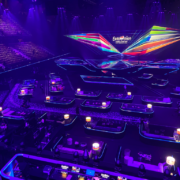
Eurovision – here we go again (as we like to imagine ABBA singing). It’s almost time for the excitement of the 67th Eurovision Song Contest! Hosted in Liverpool for the first time (the ninth time in total in the UK), as last year’s winners Ukraine were prevented from hosting it themselves. Thirty seven countries will take part in this year’s contest with millions settling down at watch parties to watch at home and thousands of singers and visitors preparing to flood the streets of Liverpool from the 9th to 13th of May. Here at event:decision we thought we’d have a look at the carbon footprint of the core event to work out whether all that fun is really worth it (we’re not party poopers, we promise).

The carbon footprint calculated

CEO and Founder Matt Grey talked us through the process of how the team arrived at the calculation of the total carbon footprint for the event (using our carbon footprint calculator track).

“Thirty-seven countries take part in the Eurovision Song Contest and each entry brings up to 25 people with them. When you calculate flights, hotel accommodation, food and drink, audience travel, audience accommodation, and the energy it takes to host such a mammoth television production to 161 million viewers, then you’re talking big numbers.

Now factor in the production and broadcast crew, staffing the ACC Liverpool and associated venues, crew, and stewards, that’s a lot of people. You also need to consider the 11,000 people travelling to Liverpool for three Eurovision events [two semi-finals and one final] and this all has an adverse impact on the event’s carbon footprint.” Matt Grey

When we input all the data into track to calculate the carbon footprint of Eurovision we arrived at a footprint of approximately 65,000 tCO2e.  As Matt explained, that number broke down into the following areas;

  • Flights – 879 tCO2e
  • Energy consumed at the venue – 30 tCO2e
  • Hotels accommodation for participants – 90 tCO2e
  • Food and beverage for participants – 46 tCO2e
  • Audience travel – 4,450 tCO2e
  • Audience hotel accommodation – 356 tCO2e
  • Broadcast/streaming – based on 161 million viewers watching a four-hour performance with four people sharing a screen – 59,000 tCO2e

So, is Eurovision’s carbon footprint a lot?

Eurovision as an event is huge. It’s the longest-running annual international televised music competition in the world. In 2022, it had a TV viewing audience of 161 million people and was streamed live into 500 cinemas in the UK. In the UK alone, more than 8.8 million people watched the Grand Final. So it’s not surprising that its carbon footprint is going to be a big number, but just how a big is it really? Matt explained further;

“It’s the same as parking 250,000 double-decker buses nose-to-tail and filling each one with carbon dioxide and other not-so-great gases”.

OK, so not great then?

“Yes, but at the same time, it’s only about 2.5 per cent of last year’s FIFA World Cup”.

That’s a sobering comparison (for FIFA). How does that work out on a per-person basis?

“It’s approximately the same as one pint of beer or one glass of wine, per viewer.”

The same carbon footprint as a single drink per viewer? When you put it like that it really doesn’t seem as bad as we thought it might be. But how much joy can the equivalent of one drink really bring while we all try to work out whether it’s worth it..?

A price worth paying?

We love measuring things, and we were sure someone must have already calculated how much joy Eurovision brings so we tracked down some research. It was carried out by Imperial College, London and it looked at exactly that question – how much joy does the Eurovision Song Contest bring? Their study found that even if your country  just takes part it increases your life satisfaction as a viewer. In fact, life satisfaction increased by four per cent for every increase of then places on the final scoreboard. Imperial found that winning the competition doesn’t even matter to the overall impact!

“When you look at it like that, the joy of 161 million people adds up to a lot…”

…concluded Matt, and we have to say we agree.

So here’s to a happy Eurovision for everyone and remember it’s the taking part not the winning that’s important (and the research backs that up).

If you’re interested in finding out more about sustainable event planning, our carbon footprint calculator – track – can calculate your own event’s projected and actual carbon footprint. Please get in touch, we can give you a demo and show you some more sample reports to illustrate just what it could do for you.

https://eventdecision.com/wp-content/uploads/2023/04/Eurovisions-carbon-footprint.png 768 1024 eventdec https://eventdecision.com/wp-content/uploads/2022/07/mainlogo-ed.png eventdec2023-04-25 07:02:582023-06-12 13:08:39Eurovision Song Contest: Carbon Headache or a Reason to Jump for Joy?
books for event profs

Introducing The Event Decision Book Club

April 18, 2023/in Book Club, event:decision

Sometimes you need to look at the bigger picture: the first in our series of recommended books for #Eventprofs.

As an event owner or event planner, you know that organisation, planning and measurement are key elements to success. From choosing the right venue to coordinating the perfect schedule, every detail matters. However, there could be a ‘big picture’ view that you might be missing out on that could take your events to the next level. Fortunately, there are some great books out there to help you think more broadly about event, your business, and inspire new thinking. In the first of an occasional series; here are five books that we recommend for any event owner or event planner looking to elevate their game. Compulsory reading if you run an event measurement consultancy!

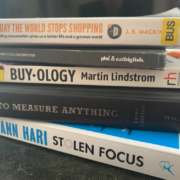
  1. The Day the World Stops Shopping: How to have a Better Life and a Greener World, J.B. Mackinnon A look at consumption around the world, in material terms. How we support our economies by buying and using ‘stuff’. Includes an interesting look at what effect the pandemic had on links to happiness. How much is ‘enough’? Is GDP even a good measure of success? In a nutshell, the books shows through variety of research and studies that that more ‘stuff’ does not equal happier lives, in fact almost the opposite.  How is this relevant for event profs? In a world where sustainability is such a buzzword, a great book to think more widely about what sustainable really means and how it could be applied more meaningfully to events. (To be really sustainable, try and get this from a library and not Amazon!).
  2. How To Measure Anything: Finding the Value of the Intangibles in Business, Douglas Hubbard A seminal text, explaining how anything can, in fact, be measured. It’s not too complex on explaining a variety of different approaches to measurement, with fascinating real-life examples on the measurement of risk, qualitative data, other intangibles and cross-industry case studies (from piano-tuners to dam-builders). If it matters, the book explains, you can measure it….and as we all know, what gets measured gets done! How is this relevant for event profs? Measuring success is a key part of delivering any event, but are we always measuring the right things? And are we missing some things that could be measured which might more effectively demonstrate success? Definitely worth a dip into.
  3. Buy-ology: How Everything we Believe About Why We Buy is Wrong, Martin Lindstrom Another look at the accumulation of ‘stuff’ but this time why we as consumers buy things and how brands use this to sell more things to us. A fascinating dive into marketing by brands and why we buy them, with case studies from Pepsi vs.Coke, McDonalds and others. If you’ve ever wondered quite why you bought that extra pair/set/thing from a brand, this book will explain the extraordinary lengths brands will adopt to get us to buy their stuff! How is this relevant for event profs? Do we really know why a visitor might choose our event and not another? What does our brand say to them about the choice they are making? A chance to step back and really thinking about how effectively we are selling the promise of our event.
  4. Overthrow: 10 Ways to tell a Challenger Story, Adam Morgan & Mark Holden We all love a good David vs. Goliath story don’t we? Here the authors outline real-life examples of how brands deliberately position themselves as challengers, up against the big brands, in order to win over their customers. Using the ten categories of challenger brands identified in their previous book Eat Big Fish, they show us how brands have successfully adopted these stand-points, in some cases even eventually becoming the Goliath themselves. How is this relevant for event profs? If your event is new to the market or up against a stronger and more dominant one, a great stimulus to think about how you could make that work to your advantage and think like a challenger.
  5. Stolen Focus: Why You Can’t Pay Attention, Johann Hari An immensely enjoyable look at why all our attention spans are currently so fragile, looking at a variety of possible culprits, not just social media and the digital world. A call for how, if we can just re-learn how to focus, we could be happier, more content and more productive. How is this relevant for event profs? We all have pressured lives but if we can’t take the time to sit and think deeply from time to time about some of the challenges ahead, we’re simply going to find ourselves running to stand still. A thought-provoking read and a manifesto for finding more time to pick up a book!

Five starter books that we think are essential reads for event owners and event planners looking to inspire their thinking and elevate their events. Whether you are looking to create a sustainable business model, think about measurement more holistically, take a lateral look at the branding of your event, or find time to focus deeply, these books all offer inspiration to help you achieve your goals. We recommend picking up a copy of one of them to take your business to the next level.

To find out more about our measurement, data and insight tools for event planners purpose, track and predict – and how they can help event planners and owners measure and track whether they’re living up to their event objectives, get in touch.

https://eventdecision.com/wp-content/uploads/2023/04/Event-Decision-blog.png 768 1024 eventdec https://eventdecision.com/wp-content/uploads/2022/07/mainlogo-ed.png eventdec2023-04-18 07:08:322023-06-06 11:41:05Introducing The Event Decision Book Club

How to Mess Up Your Company Values

April 12, 2023/in Purpose

Defining your company values is easy to get wrong. Here’s how you can mess it up.

Defining company values is a critical step for any business. Values provide a framework for decision-making and set the tone for company culture. However, the process can be fraught with pitfalls and mistakes. We’ve summarised the common mistakes business owners make when defining company values, as well as providing useful tips on how to get it right.

The Pitfalls

  1. Copying values from other companies – One of the most significant mistakes made when defining company values is copying them from other companies. While it’s useful to look at other companies for inspiration, it’s crucial to create values that are unique to your business. Copying values from another company can make it challenging to establish a distinctive identity and may not reflect the true values of your business.
  2. Lack of employee involvement –  Defining values should be a collaborative process that involves employees from all levels. It’s important to get buy-in from everyone and ensure that the values reflect the culture and beliefs of the entire organisation.
  3. Failing to communicate – Defining your values is only half the battle. It’s crucial to communicate them to employees and customers effectively. Failing to do so can lead to confusion and a lack of clarity in all your decision-making.
  4. Not demonstrating your values – Defining values is meaningless if they aren’t put into practice. It’s crucial to live the values and ensure that they are integrated into the daily operations of the business. Not doing so can lead to a lack of credibility and a breakdown in trust with both employees and customers. Mainstream media is awash with examples of brands not living by their stated values.
  5. Creating too many values – Creating too many values is a very common mistake. While it’s essential to cover all the important aspects of your business, having too many values can make it difficult to prioritise which ones are the most important to you, and it may dilute the impact of each value. It’s important to keep the values concise and memorable.

Getting It Right

  1. Involve everyone – It’s important to get buy-in from everyone in the business and ensure that the values reflect the culture and beliefs of the entire organisation. This could be achieved through surveys, focus groups, and workshops.
  2. Be uniquely ‘you’– Your company values should reflect the true values of the business. It’s essential to create values unique to your business that reflect the culture and beliefs of your organisation. This will help establish a unique identity and differentiate your business.
  3. Communicate – Communicate your values to employees and customers effectively. This can be through training, internal communication channels, or even external marketing campaigns.
  4. Live your values – Defining values is meaningless if they aren’t put into practice. It’s crucial to live your values and ensure that they are integrated into the daily operations of the business. Try doing this through employee training, leadership modelling, or recognition programs.
  5. Keep it snappy – Keep your values concise. Use simple language, focusing on the most important aspects of the business, and try creating memorable acronyms or slogans.

Defining your company values is a important step for any business owner. However, it’s important to be aware of the pitfalls. By involving every member of the business, being authentic, communicating effectively, living the values, and keeping it concise, you can define company values that reflect the true identity and mission of the business and set the tone for an unbeatable and distinctive company culture

To find out more about company values tool purpose, and how it can help you measure and track whether you’re living up to your values, get in touch.

https://eventdecision.com/wp-content/uploads/2023/04/1.jpg 768 1024 eventdec https://eventdecision.com/wp-content/uploads/2022/07/mainlogo-ed.png eventdec2023-04-12 07:30:552023-04-14 12:07:52How to Mess Up Your Company Values

5 big issues with Sustainable Event Planning

April 4, 2023/in Track

If sustainable event planning was easy everyone would be doing it. What are the big issues you need to think about?

Event sustainability is the goal of every event planner but there some issues that trip everyone up. We’ve identified five big ones we think event planners need to confront when thinking about their sustainable event planning;

1. Visible vs invisible

Some event planners love to focus on lanyards, badge holders and plastic drinks bottles, all the stuff you and your clients and visitors and guests can see. And you should. But in reality these can add up to less than 1% of an event footprint, often much smaller. Sweat the small stuff but give significant time to the big things that make a much bigger difference.

Instead of designing an event and then thinking “How can I deliver this more sustainably?” The most effective approach is: “How can I design a sustainable event?” Elements such as flights and accommodation, organised far in advance of delegates arriving on site, will have a far higher impact overall than those small tactical elements at the venue. The issue is, we don’t see them during the event, so they can attract less feedback and plaudits.

2. The travel problem

In-person events need travel, yet the sad truth is that travel is generally not yet sustainable. With one airline group (IAG ) predicting air travel rising by a third between now and 2050, it seems that the appetite for travel is not going anywhere but up (pardon the pun). It follows that international travel for events will fit within this trend. With event emissions averaging between 60-90% of the total event carbon footprint, event planners need to be more savvy when it comes to event destination and global vs. regional event models, to help other industries mitigate their impact. The location, destination and venue can be the single most important decision any event planner makes in designing a more sustainable event.

3. Local food is best?

It’s true that buying local is best when it comes to supporting local communities and economies. But, that’s not necessarily for emissions. For example, UK tomatoes grown in heated greenhouses may actually have a higher carbon footprint than tomatoes imported from hotter countries – even including the extra transport. And, whether we like it or not, vegetarian fare is not for everyone, which can lead to increased food waste if you plan a vegetarian menu to enhance event sustainability.

4. Plastic – the enemy?

Plastic has had a really bad rap over the past decade. But many recycling centres are really good at reclaiming plastic from events, be it bottles, cutlery or other. The main issue is sorting at source. Dumping full drinks into recycling bins (it happens, you know it does) can render then entire contents un-recyclable – soggy paper cups and wooden cutlery generally cannot be reclaimed. Clear and polite signage on-site can help the right bits go in the right bins.

5. Carpet

We don’t have a clear-cut answer to this one.

20sqm of carpet can have lifetime emissions of a whole tonne of CO2 associated. But for large exhibitions, omitting carpet completely causes issues of area delineation, ugly convention floors and issues for anyone with a hearing disability. If you do go for carpet, the recycling centres are few and far between, which can add significant truck miles. And yes, manufacturers will claim decomposition rates, but these can be 100 years+, far longer than the product has been in existence. We’re seeing a good number of expos trying out both options, with or without carpet covering, and so far the view is ‘undecided’.

None of the issues make an event planner’s life easier. But you can measure the effect of your decisions, at planning stage and post-event with our sustainable event planning tool – track – which can calculate your event’s projected and actual carbon footprint. Please get in touch, we can give you a demo and show you some more sample reports to illustrate just what it could do for you.

https://eventdecision.com/wp-content/uploads/2023/04/2.jpg 768 1024 eventdec https://eventdecision.com/wp-content/uploads/2022/07/mainlogo-ed.png eventdec2023-04-04 06:54:322023-04-14 12:08:035 big issues with Sustainable Event Planning

More News

  • The State of Sustainability in the Event Sector: A Responsible PerspectiveNovember 4, 2025 - 6:40 am
  • Sustainability is not the new normal…October 13, 2025 - 10:35 am
  • Business Travel Growth ForecastOctober 7, 2025 - 9:20 am
  • Better by designSeptember 23, 2025 - 9:00 am
  • Introducing ‘Factor-30’ BenchmarkingSeptember 5, 2025 - 1:50 pm
  • Sustainability in focusAugust 26, 2025 - 9:00 am
  • Region watch: US & EMEAAugust 12, 2025 - 9:00 am
  • Every story has a number, every number has a storyJuly 22, 2025 - 9:00 am
  • Who should pay for sustainable events?July 8, 2025 - 9:00 am
  • 1st & 2nd Quarter 2025 – Sustainability ReviewJune 24, 2025 - 9:00 am
  • The end of sustainability? Errr….nope.June 4, 2025 - 10:35 am
  • Hoteliers…win more MICE businessMay 27, 2025 - 12:04 pm
  • About Us
  • Partners
  • Resources
  • Client Login
  • Create An Account
  • Track
  • Impact
  • Navigator
  • Evolve
  • Tel: +44 (0)333 202 6985
  • Email: hello@eventdecision.com
© Copyright 2024 Event Decision | Privacy Policy
  • LinkedIn
  • Instagram
Scroll to top