event:decision
  • Home
  • Our Products
    • Track
    • Impact
    • Navigator
    • Evolve
  • About Us
    • Our Company
    • Clients
  • Resources
    • Quiz
    • Blog
    • Most Sustainable Agencies
  • Contact Us
  • Client Login
  • Search
  • Menu Menu
  • LinkedIn
  • Instagram
sustainability heroes

Nine Sustainability Heroes

July 25, 2023/in event:decision, Track

Who are the people the team at event:decision find the most inspiring in the sustainability space?

We’re constantly inspired by the pioneers and inventors in the sustainability space in the work that we do here at event:decision, but we’re aware that only some of them are as widely known as we think they deserve to be. So we thought we’d share with you nine sustainability innovators who have made significant contributions to the cause:

Sir David Attenborough World-renowned naturalist and broadcaster and widely regarded as a global voice for the natural world. With a career spanning decades, he has produced numerous documentaries highlighting the wonders of nature and the urgent need to protect it. Through his powerful storytelling and environmental advocacy, Attenborough has raised awareness about the impacts of climate change, plastic pollution, and habitat destruction and inspired millions to appreciate and safeguard the planet’s biodiversity. No-one tops David Attenborough in our list of sustainability heroes.
Wangari Maathai The late Wangari Maathai was a Kenyan environmental activist and the first African woman to be awarded the Nobel Peace Prize. She founded the Green Belt Movement, which focuses on reforestation, conservation, and women’s empowerment. Through tree-planting initiatives, she contributed significantly to restoring Kenya’s biodiversity and fighting against deforestation.
Mike Berners-Lee Expert in carbon foot-printing and sustainability and a professor and researcher at Lancaster University, he has focused on understanding the environmental impact of everyday activities. Through his book “How Bad Are Bananas?: The Carbon Footprint of Everything,” Berners-Lee has made complex climate issues accessible to the general public. His work has helped individuals and businesses make informed choices to reduce their carbon footprints and contribute to a more sustainable world.
Greta Thunberg The Swedish environmental activist gained international recognition for her dedication to addressing the urgent issue of climate change. At just 15 she initiated the “Fridays for Future” movement (also known as the School Strike for Climate), inspiring millions of students worldwide to strike for climate action. Her speeches and advocacy have brought global attention to the need for urgent environmental policies and actions.
Kevin Kumala Indonesian entrepreneur and biologist is the co-founder of Avani Eco, a company that focuses on producing eco-friendly alternatives to single-use plastics. He invented a sustainable bioplastic made from seaweed that is fully biodegradable and compostable. This innovative material has the potential to replace conventional plastic packaging, reducing plastic pollution and its harmful impact on the environment.
Dr. Jane Goodall Renowned for her work with chimpanzees, Dr. Jane Goodall is also a passionate advocate for environmental conservation and sustainability. Through her Jane Goodall Institute, she promotes community-centred conservation and empowers individuals to take positive action for the protection of wildlife and their habitats.
Boyan Slat Dutch inventor and entrepreneur, is the founder of The Ocean Cleanup, an organisation dedicated to developing advanced technologies to remove plastic pollution from the oceans. He designed a passive floating system that utilises ocean currents to capture and concentrate plastic debris, making cleanup operations more efficient. Slat’s invention has brought attention to the critical issue of ocean plastic pollution and inspired efforts to tackle this global challenge.
Hindou Oumarou Ibrahim The environmental activist from Chad who advocates for the rights of indigenous peoples and sustainable land management. An expert in indigenous knowledge and its connection to climate change adaptation. Ibrahim has been actively involved in global climate negotiations, ensuring that indigenous voices are heard and incorporated into climate policies. Her work has highlighted the importance of including indigenous perspectives in sustainable development and environmental conservation efforts. In 2016, Ibrahim was selected to represent civil society at the signing of the historic Paris Climate Agreement on April 22, 2016
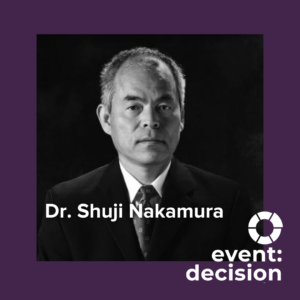
Dr. Shuji Nakamura Japanese engineer and winner of the Nobel Prize for Physics and known for his pioneering work in developing blue light-emitting diodes (LEDs) and the blue laser diode. His breakthrough in the 1990s revolutionised lighting and display technologies, significantly improving energy efficiency compared to traditional incandescent bulbs. The widespread adoption of Nakamura’s LED technology has led to substantial energy savings globally and reduced greenhouse gas emissions.

Each of these sustainability heroes has demonstrated extraordinary dedication and commitment to the preservation of our planet, inspiring people from all walks of life to take action and contribute to a more sustainable future. We find them all incredibly inspiring and they remind us every day that individual actions can drive significant positive change for the environment.

To find out more about our own work, especially our carbon footprint measurement tool track and how it can help event planners measure the carbon impact of their events – get in touch.

https://eventdecision.com/wp-content/uploads/2023/07/sustainability-heroes.png 1080 1920 eventdec https://eventdecision.com/wp-content/uploads/2022/07/mainlogo-ed.png eventdec2023-07-25 06:10:572023-07-25 10:28:13Nine Sustainability Heroes
sustainable event venue

Venue Sustainability Spotlight: 73 Waterloo

July 18, 2023/in event:decision

A sustainable event venue like no other

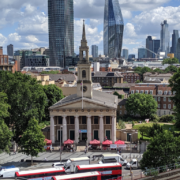
In the first of our Spotlight series – introducing you to a different event venue which has sustainability at its core – we’re taking you on a tour of 73 Waterloo in London, the events venue of of St John the Evangelist at Waterloo, to explain you why this really is a sustainable event venue like no other.

About the venue

The Grade II* church of St John’s at Waterloo was built 1822-24 to designs by Francis Bedford as one of the original Commissioners’ Churches. 

During the Second World War, at the height of the Blitz, the church was completely devastated by a firebomb in late 1941. The crypt was actually being used as a bomb shelter at the time and did its job miraculously : the 150 people who were sheltering there were completely unscathed by the devastation of the church above them.

The church sadly then had to completely close for a huge programme of rebuilding and restoration which took over a decade, opening again in 1951 as the official church of the Festival of Britain. It was a hub for the Festival, and has remained a place where the arts, society and faith intersect ever since.

“We shape our buildings. Thereafter they shape us.”

Winston Churchill

An emphasis on sustainability

Not content with one reinvention – St John’s recently underwent a second significant phase of restoration and refurbishment in 2022, with its focus on aligning with the Church of England’s goal of achieving net-zero carbon emissions by 2030. St John’s is actually at the forefront of campaigning for climate justice as home to the multi-faith action group Faith for the Climate, and is working with the Council on Lambeth-wide initiatives. So naturally, they’ve put sustainability at the heart of everything they do in and around their building.

The restoration project fully embraced sustainable practices by incorporating 80 solar panels across most of the southern roof. To enhance energy efficiency, a new internal lobby space, separated from the nave by glass screens, was also constructed to improve the building’s airtightness and minimise heat loss through warm air circulation. The replacement of glazing and window repairs in the nave not only increased airtightness but also enhanced natural daylighting levels. Measures were taken to enhance the thermal performance of the building too, such as installing acoustic and thermal insulation and implementing double glazed thermally broken windows in the crypt. The entire renovation project also seized the opportunity to incorporate cutting-edge heat recovery ventilation units and infrastructure for air-sourced heat pumps in the nave, anticipating future advancements in technology and affordability to support their effective operation.

Support the ethos of the venue and the people it supports

As a venue, 73 Waterloo has at its heart support to the local community and it has a wide outreach programme supporting organisations such as; English for Refugees, the Ukrainian Chess Club; a Food Bank and a night shelter. The event spaces can accommodate from 25-500 and by choosing to use the space for your event you are in effect supporting everyone and everything within St John’s on an ongoing basis.

“We think this really is the true meaning of sustainability.”

event:decision

Contact 73 Waterloo to find out more about booking this fantastic venue.

https://eventdecision.com/wp-content/uploads/2023/07/Sustainable-Event-Venue.png 768 1024 eventdec https://eventdecision.com/wp-content/uploads/2022/07/mainlogo-ed.png eventdec2023-07-18 06:15:012024-04-30 11:02:16Venue Sustainability Spotlight: 73 Waterloo

Why Do UK Hotel Venues Lag in Sustainability?

July 11, 2023/in Track

There are challenges in achieving sustainability for UK hotel venues

The publication of the 2023 Cornell Hotel Sustainability Index at the end of last month revealed that the UK doesn’t feature in the top 3 countries where hotels rank highly for sustainability (these are Norway, Sweden and Costa Rica). While many countries have made substantial progress, the UK faces unique challenges in its quest for fully sustainable hotel venues. What are these challenges, and what questions should event profs ask when shortlisting hotel venues for their events?

The UK’s Sustainable Hospitality Landscape

The United Kingdom has been proactive in promoting sustainability initiatives across various sectors, including the hospitality industry. However, several factors contribute to the struggle faced by hotel venues in achieving full sustainability.

1. Aging Infrastructure:

One significant challenge faced by hotel venues in the UK is our aging infrastructure. Many historic and iconic venues possess architectural features that limit the implementation of modern sustainable practices, such as energy-efficient systems, renewable energy generation, and effective waste management.

2. Limited Space for Renewable Energy:

The UK’s smaller land area compared to other countries also presents a constraint when it comes to incorporating renewable energy solutions. Hotel venues often struggle to find sufficient space for installing solar panels or wind turbines, limiting their capacity to generate clean energy.

3. Regulatory Framework and Policy:

The regulatory framework and policies in the UK, while supporting sustainability goals, can also pose obstacles for hotel venues.

i. Complex Planning Permissions:

Obtaining planning permissions for sustainable infrastructure installations can be a complex and time-consuming process in the UK. The bureaucratic hurdle makes it challenging for hotel venues to implement sustainable practices within a reasonable timeframe.

ii. Unclear Incentives:

While the UK government offers incentives and grants for sustainable initiatives, these programs may lack clarity or have limited accessibility. The absence of clear guidelines and consistent support makes it difficult for hotel venues to navigate the sustainability landscape effectively.

4. Supply Chain Challenges:

The pursuit of sustainability requires collaboration throughout the entire supply chain, which can be a challenging task for hotel venues in the UK.

5. Local Sourcing Limitations:

Despite the rising demand for locally sourced products and services, the UK faces limitations in terms of local availability. Hotel venues often struggle to find reliable local suppliers for sustainable materials, food, and beverages, hindering their ability to embrace a fully sustainable approach.

6. Transportation and Logistics:

Logistics and transportation play a crucial role in sustainability efforts. The UK’s dense urban environment, coupled with limited public transport infrastructure, increases reliance on road transportation. This reliance on vehicles can have a significant environmental impact, particularly when it comes to large-scale events hosted by hotel venues.

With all the above in mind, here’s our handy checklist for exploring the suitability of hotel venues for your event.

Key Questions for #EventProfs Investigating Hotels & Venues

1. What sustainable initiatives has the venue implemented? (e.g., energy-efficient systems, waste management practices, water conservation measures)

2. Does the venue have any certifications or accreditations for sustainability? (e.g., LEED certification, Green Key, ISO 14001, EcoSmart)

3. What renewable energy sources are used or planned for the venue?

4. How does the venue manage waste and recycling? Are there any composting or recycling programs in place?

5. Does the venue have a clear sustainability policy and targets?

6. What efforts are made to source local, seasonal, and sustainably produced food and beverages?

7. How does the venue encourage sustainable transportation options for guests and event attendees?

8. Are there any partnerships with local sustainability-focused organisations or suppliers?

9. Does the venue have plans for ongoing sustainability improvements and innovations?

10. What support does the venue provide to event planners in achieving sustainability goals?

While the UK has embraced sustainability and made progress in various sectors, achieving full sustainability in UK hotel venues continues to pose unique challenges. Event planners should be aware of this and ask critical questions when investigating hotel venues for their events. Even within the challenging environment, hotels can still demonstrate that they are making steps to achieve sustainability and help event planners meet their sustainability targets.

If you’re interested in finding out more about sustainable event planning, get in touch to find out how our tool track can calculate your event’s projected carbon footprint and help you evaluate the impact of different venue choices.


https://eventdecision.com/wp-content/uploads/2023/07/top_three_edblog.png 768 1024 eventdec https://eventdecision.com/wp-content/uploads/2022/07/mainlogo-ed.png eventdec2023-07-11 05:00:052023-07-25 10:27:40Why Do UK Hotel Venues Lag in Sustainability?

Hotel Sustainability: How Green is Your Venue?

July 4, 2023/in Track

The Cornell Hotel Sustainability Index: A Valuable Tool for Event Planners

Event planners play an important role in ensuring that gatherings, conferences, and meetings are not only successful but also environmentally responsible. One useful tool that event planners can use to assess and compare the sustainability efforts of hotels is the Cornell Hotel Sustainability Index (CHSI). The (CHSI) is the biggest industry benchmark and provides a standardised framework for evaluating and measuring hotel sustainability, using Hotel Carbon Measurement Initiative (HCMI) and Hotel Water Measurement Initiative (HWMI) metrics from over over 20,000 properties to track energy, greenhouse gas emissions and water usage. The 2023 report just out indexes data from 25,576 hotels from 31 international hotel groups and has some fascinating findings.

But, first a bit of history and an overview of what the CHSI is and what it covers;

History of the Cornell Hotel Sustainability Index

The Cornell Hotel Sustainability Index, also known as the CHSI, was developed by the Center for Hospitality Research at Cornell University’s School of Hotel Administration. The index was introduced in 2011 as an initiative to assist the global hospitality industry in measuring and improving sustainability practices. With the aim of providing a consistent benchmarking tool over time, and across geographical locations, the CHSI enables hotels to assess their sustainability performance and to identify areas for improvement.

Coverage and Components of the CHSI

The CHSI covers a broad range of sustainability-related areas within the hotel industry. It evaluates and measures sustainability efforts in six key categories:

  1. Environmental Management: Focuses on environmental policies, practices, and certifications, such as energy efficiency, water conservation, waste management, and green building certifications like LEED (Leadership in Energy and Environmental Design).
  2. Operational Practices: Examines day-to-day operational activities and procedures, including purchasing practices, supplier relationships, employee training, and guest engagement programs.
  3. Social Impact: Evaluates the hotel’s impact on local communities, including social responsibility initiatives, community involvement, and employee well-being programs.
  4. Human Resources: Assesses human resource practices, such as employee satisfaction, diversity and inclusion, talent development, and labor practices.
  5. Risk Management: Focuses on the hotel’s preparedness and resilience to various risks and emergencies, including crisis management plans, safety procedures, and disaster response.
  6. Innovation: Recognises and rewards hotels for their innovative sustainability practices, encouraging the industry to continually evolve and adopt new environmentally friendly technologies and approaches.

Key Findings 2023 CHSI

The 2023 report provided key findings as follows;

  • Average hotel greenhouse gas (GHG) emissions per square meter have reduced by 30.42% between 2019 and 2021 (the full year on which the 2023 Index is based).
  • The best performers in the Top 25% of hotels are emitting 2.5x less than the hotels in the bottom 25%.
  • Renewable energy is key to reducing hotel carbon emissions.
  • Luxury hotels tend to have the highest carbon intensities compared to other segments.
  • Limited-service hotels are less carbon intensive than full-service hotels.
  • The limited service segment is reducing emissions faster than the full-service segment.
  • Resort properties are slower to reduce GHG emissions than other properties.
  • The top three countries with the lowest hotel GHG intensity were; Norway – 13.5 (kgCO2e/m2), Sweden – 14.9 and Costa Rica – 15.6.
  • The bottom three countries with the highest hotel GHG intensity were; Hong Kong, China – 214.5 (kgCO2e/m2), Barbados – 194.5 and Kuwait – 167.0.

Why use the Cornell Hotel Sustainability Index (CHSI)?

Being aware of the CHSI could provide event planners with several advantages:

  1. Sustainability Alignment: Event planners who prioritise sustainability in their events can use the CHSI as a valuable tool to identify hotels that align with sustainability goals. By selecting hotels with higher CHSI scores, event planners can ensure that their event venue shares their commitment to environmental responsibility.
  2. Benchmarking and Comparison: The CHSI offers a standardised framework for evaluating and measuring hotel sustainability performance. Event planners can use the index to benchmark and compare different hotel venues based on their sustainability practices, empowering them to make informed decisions and choose hotels that demonstrate strong sustainability performance, setting higher standards for the industry.
  3. Transparent Evaluation: The CHSI provides a transparent evaluation of hotels’ sustainability efforts. Event planners can review the index to gain insights into the specific areas where hotels excel or need improvement in terms of sustainability practices, enabling event planners to ask targeted questions, have informed discussions with hotels, and ensure that sustainability considerations are adequately addressed in event planning and execution.
  4. Event Reputation and Stakeholder Expectations: Sustainability has become an essential factor in shaping the reputation and image of events. Event planners who select hotels with higher CHSI scores demonstrate their commitment to hosting sustainable events. This, in turn, enhances their reputation among attendees, sponsors, and other stakeholders who increasingly prioritise environmental responsibility.
  5. Collaboration Opportunities: The CHSI highlights hotels that are leading the way in sustainable practices. Event planners can leverage this information to initiate collaborations and partnerships with hotels that prioritise sustainability. Collaborations can lead to shared knowledge, innovative event solutions, and the creation of more environmentally friendly event experiences.
  6. Positive Impact and Legacy: By choosing hotels that prioritise sustainability, event planners contribute to reducing the environmental impact of events. By promoting sustainable practices through venue selection, waste reduction, energy efficiency, and more, event planners are contributing to fostering a culture of sustainability within the events industry.

If you’re interested in finding out more about sustainable event planning, why not explore our tool track  to calculate your event’s projected carbon footprint. If you get in touch, we can give you a demo to illustrate just what it could do for you.

https://eventdecision.com/wp-content/uploads/2023/07/Copy-of-Event-Decision-blog-.png 768 1024 eventdec https://eventdecision.com/wp-content/uploads/2022/07/mainlogo-ed.png eventdec2023-07-04 06:37:082023-07-10 13:36:19Hotel Sustainability: How Green is Your Venue?

More News

  • It’s More Acceptable to Fart in a LiftFebruary 9, 2026 - 10:26 am
  • Putting ‘sustainability’ in a silo is costing you money (and clients)January 28, 2026 - 12:21 pm
  • How to win the gold rushJanuary 13, 2026 - 10:53 am
  • Where growth goes to die…January 6, 2026 - 6:51 pm
  • How to put a real number against the Social Value of your EventDecember 9, 2025 - 1:48 pm
  • Eleven predictions for event sustainability in 2025. (Yes 2025).November 25, 2025 - 9:49 am
  • The State of Sustainability in the Event Sector: A Responsible PerspectiveNovember 4, 2025 - 6:40 am
  • Sustainability is not the new normal…October 13, 2025 - 10:35 am
  • Business Travel Growth ForecastOctober 7, 2025 - 9:20 am
  • Better by designSeptember 23, 2025 - 9:00 am
  • Introducing ‘Factor-30’ BenchmarkingSeptember 5, 2025 - 1:50 pm
  • Sustainability in focusAugust 26, 2025 - 9:00 am
  • About Us
  • Partners
  • Resources
  • Client Login
  • Create An Account
  • Track
  • Impact
  • Navigator
  • Evolve
  • Tel: +44 (0)333 202 6985
  • Email: hello@eventdecision.com
© Copyright 2024 Event Decision | Privacy Policy
  • LinkedIn
  • Instagram
Scroll to top