
Badges or reality?
The badge trap: why “sustainable” badges can mislead event buyers – and what to look at instead
A venue or agency with the best certifications isn’t automatically the best choice. For most corporate events, the biggest sustainability decision you’ll make has nothing to do with badges on the wall.
Earlier today, we spoke with a Head of Events planning a Sustainability Summit in London. She was looking at venues with strong sustainability credentials and had hit a wall: the accredited options were coming in at two to three times the price of perfectly capable alternatives. She wanted to do the right thing. The budget didn’t.
The honest answer caught her off guard.
For a London audience, the single biggest sustainability decision she would make is whether the venue sits on a Tube line.
That may sound reductive, but it points to a bigger issue across the events industry:
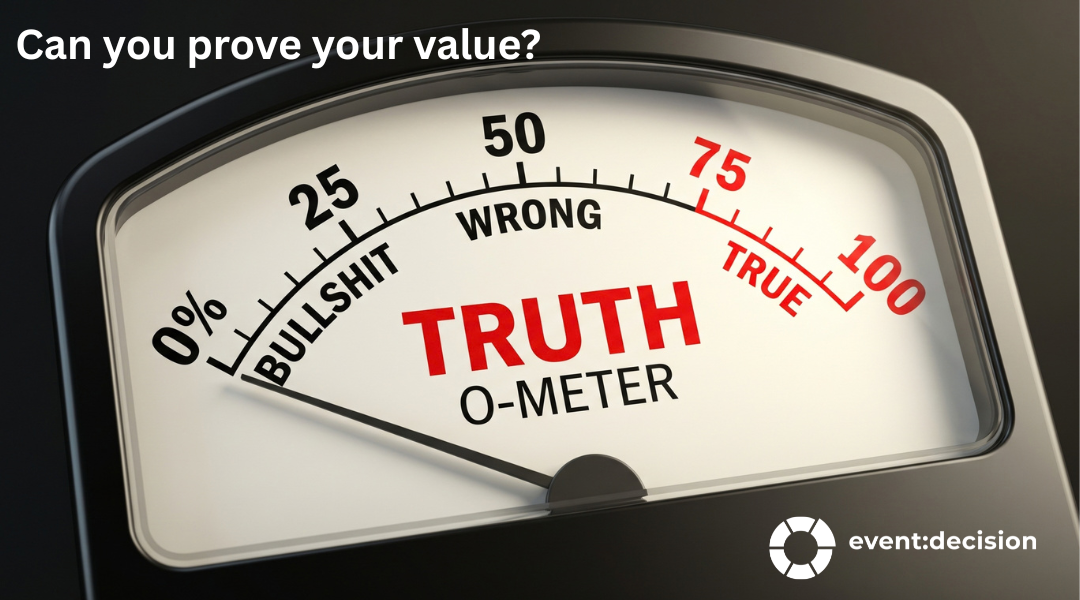
Badges measure inputs. Buyers should be paying for outcomes.
Sustainability badges and accreditations have proliferated across the events sector, and many of them are genuinely useful. They signal that a venue has policies, systems and operational processes in place around energy, waste, water use or procurement. That tells you something important about how the building is run.
But it tells you remarkably little about the actual impact of your event.
For most events, between 70–90% of total carbon impact comes from attendee travel, accommodation and logistics – not the venue’s lighting system or recycling programme. A venue can hold every certification available and still host an event with a significantly higher footprint than a less “decorated” alternative.
We still smile wryly at the request on a well-known online forum for a “sustainable venue with 300+ car parking spaces”.
Back to today. This Sustainability Summit was a perfect example.
A ‘gold-tier’ accredited venue, a 2-3x the price – sat awkwardly for public transport. The alternative venue, with fewer visible sustainability credentials, is directly connected to a major public transport interchange.
If even a proportion of attendees end up taking taxis because a venue is difficult to reach, no amount of efficient HVAC systems or reusable signage will offset the emissions that follow. In practical terms, the more accessible venue was likely to produce the lower overall event footprint.
And it would free up budget for the interventions that genuinely move the dial:
- Lower-impact catering choices
- Fairly paid crew and suppliers
- Local sourcing
- Food redistribution and waste reduction
- Better event measurement and reporting
Because responsibility is bigger than carbon alone.
A truly responsible event isn’t just one that emits less. It’s one whose supply chain treats people fairly, creates positive local impact, and leaves something behind in the community it visits.
That’s where many badge-led procurement processes fall short. They focus heavily on venue operations while ignoring the wider outcomes generated by the event ecosystem itself.
So instead of asking:
“Is this venue sustainable?”
Event organisers should start asking:
1. How will attendees actually get there?
What percentage can realistically travel by public transport? How much travel-related carbon will the location create or avoid?
2. What does the event supply chain look like?
Who is catering the event? Are suppliers local? Are staff paid fairly? Are there positive social outcomes attached to procurement decisions?
3. Will the outcomes of this specific event be measured?
Not the venue’s annual sustainability report – the actual environmental and social outcomes generated by your event.
This shift matters because buyers are increasingly being asked to report against real outcomes, not good intentions. Stakeholders, procurement teams and ESG reporting frameworks are all moving in the same direction: evidence over perception.
That doesn’t mean badges and accreditations are useless. Far from it. They remain valuable indicators that a venue takes sustainability seriously and can help buyers complete initial due diligence more quickly.
But they should be a starting point – not the decision itself.
Used incorrectly, certifications can distort purchasing decisions, pushing organisations to spend disproportionately on visible credentials while overlooking the factors that actually determine impact.
The events industry doesn’t need more logos on venue websites.
It needs better measurement. Better mirrors. Better decision-making. Better outcomes.
Choose the location that makes the responsible choice easiest. Invest in a budget that creates measurable environmental and social value. Then measure the results properly.
The shortest version: badges tell you what a company wants to be. Measured outcomes tell you what it actually delivers.
When you decide whether to buy a product from an online retailer, do you look at the vendor accreditations or the product reviews?
That’s what a responsible event buyer should look for – however many badges appear over the front door.
event:decision helps organisations measure, benchmark and improve the environmental and social outcomes of their events through independent responsibility measurement, verification and advisory services.