event:decision
  • Home
  • Our Products
    • Track
    • Impact
    • Navigator
    • Evolve
  • About Us
    • Our Company
    • Clients
  • Resources
    • Quiz
    • Blog
    • Most Sustainable Agencies
  • Contact Us
  • Client Login
  • Search
  • Menu Menu
  • LinkedIn
  • Instagram
sustainable event venue

Venue Sustainability Spotlight: 73 Waterloo

July 18, 2023/in event:decision

A sustainable event venue like no other

In the first of our Spotlight series – introducing you to a different event venue which has sustainability at its core – we’re taking you on a tour of 73 Waterloo in London, the events venue of of St John the Evangelist at Waterloo, to explain you why this really is a sustainable event venue like no other.

About the venue

The Grade II* church of St John’s at Waterloo was built 1822-24 to designs by Francis Bedford as one of the original Commissioners’ Churches. 

During the Second World War, at the height of the Blitz, the church was completely devastated by a firebomb in late 1941. The crypt was actually being used as a bomb shelter at the time and did its job miraculously : the 150 people who were sheltering there were completely unscathed by the devastation of the church above them.

The church sadly then had to completely close for a huge programme of rebuilding and restoration which took over a decade, opening again in 1951 as the official church of the Festival of Britain. It was a hub for the Festival, and has remained a place where the arts, society and faith intersect ever since.

“We shape our buildings. Thereafter they shape us.”

Winston Churchill

An emphasis on sustainability

Not content with one reinvention – St John’s recently underwent a second significant phase of restoration and refurbishment in 2022, with its focus on aligning with the Church of England’s goal of achieving net-zero carbon emissions by 2030. St John’s is actually at the forefront of campaigning for climate justice as home to the multi-faith action group Faith for the Climate, and is working with the Council on Lambeth-wide initiatives. So naturally, they’ve put sustainability at the heart of everything they do in and around their building.

The restoration project fully embraced sustainable practices by incorporating 80 solar panels across most of the southern roof. To enhance energy efficiency, a new internal lobby space, separated from the nave by glass screens, was also constructed to improve the building’s airtightness and minimise heat loss through warm air circulation. The replacement of glazing and window repairs in the nave not only increased airtightness but also enhanced natural daylighting levels. Measures were taken to enhance the thermal performance of the building too, such as installing acoustic and thermal insulation and implementing double glazed thermally broken windows in the crypt. The entire renovation project also seized the opportunity to incorporate cutting-edge heat recovery ventilation units and infrastructure for air-sourced heat pumps in the nave, anticipating future advancements in technology and affordability to support their effective operation.

Support the ethos of the venue and the people it supports

As a venue, 73 Waterloo has at its heart support to the local community and it has a wide outreach programme supporting organisations such as; English for Refugees, the Ukrainian Chess Club; a Food Bank and a night shelter. The event spaces can accommodate from 25-500 and by choosing to use the space for your event you are in effect supporting everyone and everything within St John’s on an ongoing basis.

“We think this really is the true meaning of sustainability.”

event:decision

Contact 73 Waterloo to find out more about booking this fantastic venue.

https://eventdecision.com/wp-content/uploads/2023/07/Sustainable-Event-Venue.png 768 1024 eventdec https://eventdecision.com/wp-content/uploads/2026/04/mainlogo-ed.png eventdec2023-07-18 06:15:012024-04-30 11:02:16Venue Sustainability Spotlight: 73 Waterloo
consumer psychology for event profs

What #EventProfs can Learn From a Pineapple

June 27, 2023/in event:decision

What lesson does a tropical fruit hold for #EventProfs?

Consumer psychology plays an important role in influencing individual behaviour and decision-making. As #eventprofs look to promote sustainability among attendees, understanding how consumer psychology works can be a powerful tool. Two lessons from the retail industry — new approaches to selling pineapples and the success of ‘wonky veg’— offer useful lessons in what it takes to win over the consumer.

The Power of Perception: The Pineapple

In Costa Rica some pineapple growers found that cutting off the tops (‘crowns’) of pineapples allowed more fruit to fit in shipping crates, reducing their carbon footprint by more than 20%. Other growers and European supermarket chains all rejected the idea of adopting the approach as they felt consumers just wouldn’t buy the fruit without their distinctive tops. However, one retailer was persuaded to display the crown-free pineapples with signage explaining their sustainability benefits, and to their surprise – consumers bought as many crown-free pineapples as crowned ones.

The Lesson for #EventProfs:

If we want to encourage sustainable behaviour, we need to commit to education and use signage and visual cues to highlight the available sustainable choices at our events. We can’t assume that visitors will reject, or accept, sustainability efforts without telling them the why of the option we’re asking them to take. We may believe that human beings are inherently lazy and will prefer the familiar or the easy option – but if we take some time to explain the benefits, the pineapple story tells us we will indeed adopt alternatives. Don’t assume it always has to be done the way it’s always been done!

Social Norms: the ‘Wonky Veg’ Story

The ‘wonky veg’ phenomenon also demonstrates the power of social norms in consumer psychology. One supermarket started promoting misshapen vegetables, which would typically fail strict quality control, as a sustainable choice at a slightly lower price. By reframing the unusually-shaped vegetables as an ethical option, visually flagging that a deliberate choice had been made in the shoppers’ baskets and trolleys, they tapped into the desire for social acceptance, aligning sustainable behaviour with a positive image.

The Lesson for #EventProfs:

We can leverage the concept of social norms by highlighting and celebrating sustainable actions taken by others. For instance, recognising and rewarding attendees who actively engage in eco-friendly practices during the event, such as using reusable water bottles or participating in recycling initiatives, can create a positive social norm around sustainability. This approach taps into our inherent desire to belong and be accepted, increasing the likelihood of sustainable behaviour.

What it Takes to Encourage Sustainable Behaviour at Events:

Using crown-free pineapples and wonky veg as our inspiration how can we leverage consumer psychology in other ways to encourage sustainable behaviour at events? One example might be in the area of encouraging sustainable travel choices.

Encourage carpooling or public transport by incentivising more sustainable travel: additional digital swag, fast-track entry or free content for delegates or visitors travelling via public transport, or example, or offer subsidised tickets, WiFi or coffee vouchers for delegates adopting your sustainable credentials.

Using the same approach, also take the opportunity of highlighting to visitors what previous sustainability efforts have achieved by way of encouraging repeat behaviour. “At one event alone, we saved 33 meals which were shared with 7 local families. The environmental stats also add up, with 10,420 litres of water saved and 60kg of CO2 emissions avoided. Just think of the impact across our series of 10 events” is a genuine quote from a corporate planner in May 2023.

Understanding consumer psychology can be incredibly useful for event planners as we aim to promote sustainable behaviour. By applying lessons from other industries, event planners and owners can create environments that inspire and encourage sustainable choices. By choosing to educate everyone involved in the event on the benefits of sustainability, events can become powerful catalysts for positive change, promoting a more sustainable future.

If you’re interested in finding out more about sustainable event planning, why not use track  to calculate your own event’s projected carbon footprint? Do get in touch, we can give you a demo to illustrate just what it could do for you.

https://eventdecision.com/wp-content/uploads/2023/06/Pineapple.png 768 1024 eventdec https://eventdecision.com/wp-content/uploads/2026/04/mainlogo-ed.png eventdec2023-06-27 03:00:422023-07-10 13:36:28What #EventProfs can Learn From a Pineapple
event sustainability quiz

Are you an Event Sustainability Guru? [QUIZ]

June 13, 2023/in event:decision

How much do you really know about event sustainability?

We’ve been on a mission to educate everyone in the events industry all about sustainability for events. But we thought you might like to test your knowledge so far and find out just how much of a sustainability expert you are in the world of events

Our new quiz “Are You an Event Sustainability Guru?” will let you do just that!

The lighthearted side

Join the fun and test your knowledge

Buckle up, event planners, because this quiz is like no other. We’ve planned it to keep you engaged from start to finish. Get ready to explore a series of questions that will completely test your event sustainability IQ and uncover any preconceptions you may be harbouring about what sustainability really means. Whether you’re a seasoned pro or just dipping your toes into the world of all things event sustainability, our quiz is designed to entertain and challenge.

Find your event sustainability ‘type’

Are you a Green Guru or a Greenhorn? Are those around you consistently impressed by the depth of your sustainability knowledge or are you woefully under-informed? The quiz will tell you what your sustainability ‘type’ is (as well as telling you what you got wrong and pointing you in the direction of some useful information).

The serious message

Why event sustainability matters

Beyond the fun of our quiz lies a serious message – the vital importance of event sustainability. As event planners, we have a unique opportunity to create memorable experiences while minimising our impact on the environment. And, as we’ve shown before, sustainable events are efficient events so we can do all that while enhancing the bottom line too.

The power of (self) education

Becoming an event sustainability guru goes beyond acing our quiz; it involves continuous learning and staying up-to-date with the latest information. When we educate ourselves about sustainable event practices, we empower ourselves to make informed decisions that benefit both the planet, our clients, and ourselves.

The positive impact of sustainable events

Sustainable events not only help protect the environment but also create a positive impact on attendees, clients, and communities. By showcasing carbon-friendly practices, we can inspire and educate attendees and guests, raising awareness about the importance of sustainability in their own lives. And, hosting sustainable events can enhance our own reputations, attracting like-minded clients who prioritise minimising carbon emissions.

So, congratulations, event planners, on taking the first step towards becoming an event sustainability guru! Our quiz will take you on a journey that we hope is both entertaining and enlightening. By delving into the world of event sustainability, you’ll uncover a serious underlying message – the critical role we play in creating sustainable events. Remember, education is key, and staying informed about sustainable practices allows us to make a positive impact on the environment, our clients, and society as a whole.

Now, go ahead and take the quiz!

To find out more about our full suite of data and insight tools for event planners purpose, track and predict – and how they can help event planners and owners measure and track whether they’re delivering on their event objectives, get in touch.

https://eventdecision.com/wp-content/uploads/2023/06/Copy-of-Event-Sustainability-Guru-Quiz.png 768 1024 eventdec https://eventdecision.com/wp-content/uploads/2026/04/mainlogo-ed.png eventdec2023-06-13 08:08:502023-06-13 08:20:19Are you an Event Sustainability Guru? [QUIZ]
event profs book club

The Event Decision Book Club (2)

June 6, 2023/in Book Club, event:decision

The second in our series of recommended books for #Eventprofs

We’ve been delighted at how well our Book Club has gone down with event planners. We’ve had lots of feedback about the first instalment of our recommended books. So we’ve put together our next selection of books. All of them are chosen to help you think in more ‘big picture’ terms about your agency, business or event  – and to inspire you to think differently. And all the books have been read by our founder Matt, so we can personally vouch for them!

Here’s the June 2023 selection;

  1. The Sustainable Business Book: Building a resilient modern business in six steps, Sarah Duncan. A comprehensive guide to integrating sustainability into business practices. It covers topics such as environmental impact, ethical sourcing, and social responsibility. An absolutely brilliant bite-sized way to guide you through how to consider and implement more sustainable practice, whatever your business. How is this relevant for event profs? It offers valuable insights on creating eco-friendly events, reducing waste, and implementing sustainable strategies that align with the growing demand for environmentally conscious events.
  2. Priceless, William Poundstone. Explores the fascinating world of behavioural economics and the power of psychological pricing. Through captivating examples and case studies, Poundstone reveals how pricing strategies can influence consumer behaviour and drive sales. It’s a fun and insightful look at how brands price their products and services to make them look attractive to us. Lots of real world examples of how price in £ is linked to value…or is it? How is this relevant for event profs? Plenty of inspiration in this book to develop innovative pricing structures, optimise ticket sales, and leverage psychological techniques to enhance attendee experiences and increase event revenue.
  3. How to make a decision, Tanya Barad.  Decision-making is a key skill for event planners, and Barad’s book offers guidance on making informed choices, delving into various decision-making models, techniques, and biases, empowering readers to navigate complex scenarios with confidence. It’s a nice little read on how decisions get made, what you need to make them and how/why you may not! How is this relevant for event profs? We all need to make decisions don’t we? This book can help when working out how to make effective decisions around choosing event venues, selecting suppliers, solving logistical challenges – and many other event-specific scenarios.
  4. The Future We Choose, Christiana Figueres & Tom Rivett-Carnac. The key architects of the Paris Agreement, present a compelling call to action for combating climate change. They outline practical solutions and inspire readers to create a sustainable future. Quite practical, optimistic and empowering. It shows us steps we can all take to renew our planet and create a better world beyond the climate crisis: today, tomorrow, this year and in the coming decade. How is this relevant for event profs? By incorporating sustainable practices into events, raising awareness about climate change, and inspiring clients and event attendees to take action.

Four thought-provoking books in our event profs book club we think will inspire you to think a bit differently about your events and empower you in your work. Whether you’re looking to make better decisions, think more creatively about pricing or build truly sustainable and climate-friendly events, each of these books has something for you.

To find out more about our data and insight tools for event planners purpose, track and predict – and how they can help event planners and owners measure and track whether they’re living up to their event objectives, get in touch.

https://eventdecision.com/wp-content/uploads/2023/06/Correct-Book-Club.png 768 1024 eventdec https://eventdecision.com/wp-content/uploads/2026/04/mainlogo-ed.png eventdec2023-06-06 10:45:492023-06-12 13:08:05The Event Decision Book Club (2)
books for event profs

Introducing The Event Decision Book Club

April 18, 2023/in Book Club, event:decision

Sometimes you need to look at the bigger picture: the first in our series of recommended books for #Eventprofs.

As an event owner or event planner, you know that organisation, planning and measurement are key elements to success. From choosing the right venue to coordinating the perfect schedule, every detail matters. However, there could be a ‘big picture’ view that you might be missing out on that could take your events to the next level. Fortunately, there are some great books out there to help you think more broadly about event, your business, and inspire new thinking. In the first of an occasional series; here are five books that we recommend for any event owner or event planner looking to elevate their game. Compulsory reading if you run an event measurement consultancy!

  1. The Day the World Stops Shopping: How to have a Better Life and a Greener World, J.B. Mackinnon A look at consumption around the world, in material terms. How we support our economies by buying and using ‘stuff’. Includes an interesting look at what effect the pandemic had on links to happiness. How much is ‘enough’? Is GDP even a good measure of success? In a nutshell, the books shows through variety of research and studies that that more ‘stuff’ does not equal happier lives, in fact almost the opposite.  How is this relevant for event profs? In a world where sustainability is such a buzzword, a great book to think more widely about what sustainable really means and how it could be applied more meaningfully to events. (To be really sustainable, try and get this from a library and not Amazon!).
  2. How To Measure Anything: Finding the Value of the Intangibles in Business, Douglas Hubbard A seminal text, explaining how anything can, in fact, be measured. It’s not too complex on explaining a variety of different approaches to measurement, with fascinating real-life examples on the measurement of risk, qualitative data, other intangibles and cross-industry case studies (from piano-tuners to dam-builders). If it matters, the book explains, you can measure it….and as we all know, what gets measured gets done! How is this relevant for event profs? Measuring success is a key part of delivering any event, but are we always measuring the right things? And are we missing some things that could be measured which might more effectively demonstrate success? Definitely worth a dip into.
  3. Buy-ology: How Everything we Believe About Why We Buy is Wrong, Martin Lindstrom Another look at the accumulation of ‘stuff’ but this time why we as consumers buy things and how brands use this to sell more things to us. A fascinating dive into marketing by brands and why we buy them, with case studies from Pepsi vs.Coke, McDonalds and others. If you’ve ever wondered quite why you bought that extra pair/set/thing from a brand, this book will explain the extraordinary lengths brands will adopt to get us to buy their stuff! How is this relevant for event profs? Do we really know why a visitor might choose our event and not another? What does our brand say to them about the choice they are making? A chance to step back and really thinking about how effectively we are selling the promise of our event.
  4. Overthrow: 10 Ways to tell a Challenger Story, Adam Morgan & Mark Holden We all love a good David vs. Goliath story don’t we? Here the authors outline real-life examples of how brands deliberately position themselves as challengers, up against the big brands, in order to win over their customers. Using the ten categories of challenger brands identified in their previous book Eat Big Fish, they show us how brands have successfully adopted these stand-points, in some cases even eventually becoming the Goliath themselves. How is this relevant for event profs? If your event is new to the market or up against a stronger and more dominant one, a great stimulus to think about how you could make that work to your advantage and think like a challenger.
  5. Stolen Focus: Why You Can’t Pay Attention, Johann Hari An immensely enjoyable look at why all our attention spans are currently so fragile, looking at a variety of possible culprits, not just social media and the digital world. A call for how, if we can just re-learn how to focus, we could be happier, more content and more productive. How is this relevant for event profs? We all have pressured lives but if we can’t take the time to sit and think deeply from time to time about some of the challenges ahead, we’re simply going to find ourselves running to stand still. A thought-provoking read and a manifesto for finding more time to pick up a book!

Five starter books that we think are essential reads for event owners and event planners looking to inspire their thinking and elevate their events. Whether you are looking to create a sustainable business model, think about measurement more holistically, take a lateral look at the branding of your event, or find time to focus deeply, these books all offer inspiration to help you achieve your goals. We recommend picking up a copy of one of them to take your business to the next level.

To find out more about our measurement, data and insight tools for event planners purpose, track and predict – and how they can help event planners and owners measure and track whether they’re living up to their event objectives, get in touch.

https://eventdecision.com/wp-content/uploads/2023/04/Event-Decision-blog.png 768 1024 eventdec https://eventdecision.com/wp-content/uploads/2026/04/mainlogo-ed.png eventdec2023-04-18 07:08:322023-06-06 11:41:05Introducing The Event Decision Book Club

The Critical Importance of Measurement for Event Planners

January 31, 2023/in event:decision

The most important tools in an event planner’s toolkit are the ones that help you measure your event.

As the events industry continues to grow and evolve, the use of data and insight tools has become increasingly important for event managers striving for success. Insight tools allow event managers to make data-driven decisions, measure the effectiveness of your events, and gain a deeper understanding of your audiences, as well as measure the environmental impact of the event and how well it reflects and enhances company values.

A key benefit of using data and insight tools is the ability to make informed, data-driven, decisions. By collecting and analysing data on past events, event managers can identify patterns and trends that can inform the planning and execution of future events. This leads to more effective and efficient event planning, as well as increased ROI for event organisers.

Data and insight tools also allow event managers to measure the effectiveness of their events. This includes tracking attendance, engagement, and feedback from attendees. By measuring these metrics, event managers can determine which aspects of their events are resonating with attendees and which need improvement.

Data and insight tools can also help event managers gain a much deeper understanding of their audiences. By collecting data on demographics, interests, and behaviour, event managers can create more targeted and personalised experiences for attendees. This can lead to increased engagement and satisfaction among attendees, as well as opportunities for upselling and cross-selling.

Measuring the environmental impact of an event is becoming almost the norm. With rising public sustainability concerns, measuring and reducing an event’s carbon footprint is crucial for event managers to meet the expectations of attendees and stakeholders.

There are hundreds of data and insight tools that event managers can use to measure their events. Some starting examples might include:

  1. Google Analytics: This allows event managers to track website traffic and engagement, including page views, bounce rates, and time on site. This data can be used to optimise website design and better target digital marketing and content to improve the user experience and engagement.
  2. Bespoke Forms: (SurveyMonkey, Typeform, Jotform for example) These allow event managers to collect feedback from attendees through surveys. The data can be used to improve the overall event experience and make changes for future events.
  3. Eventbrite Insights: This allows event managers to track attendance, ticket sales, and revenue for their events. This data can be used to inform pricing and marketing strategies and measure the overall ROI of an event.
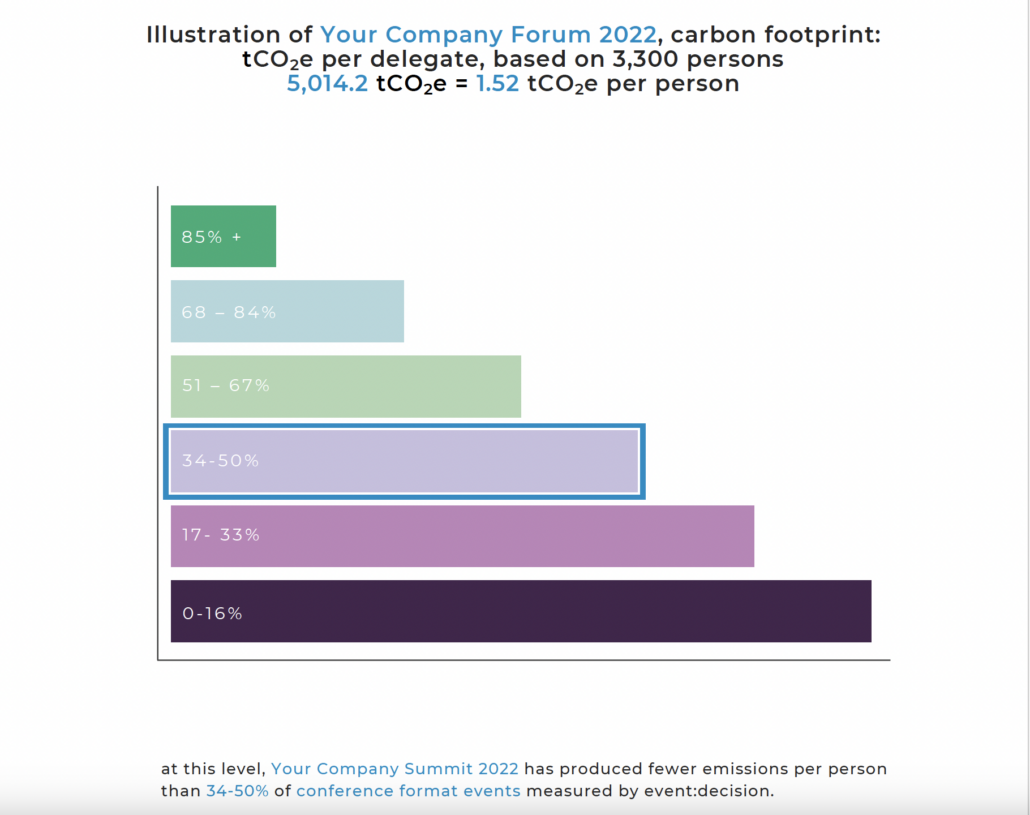
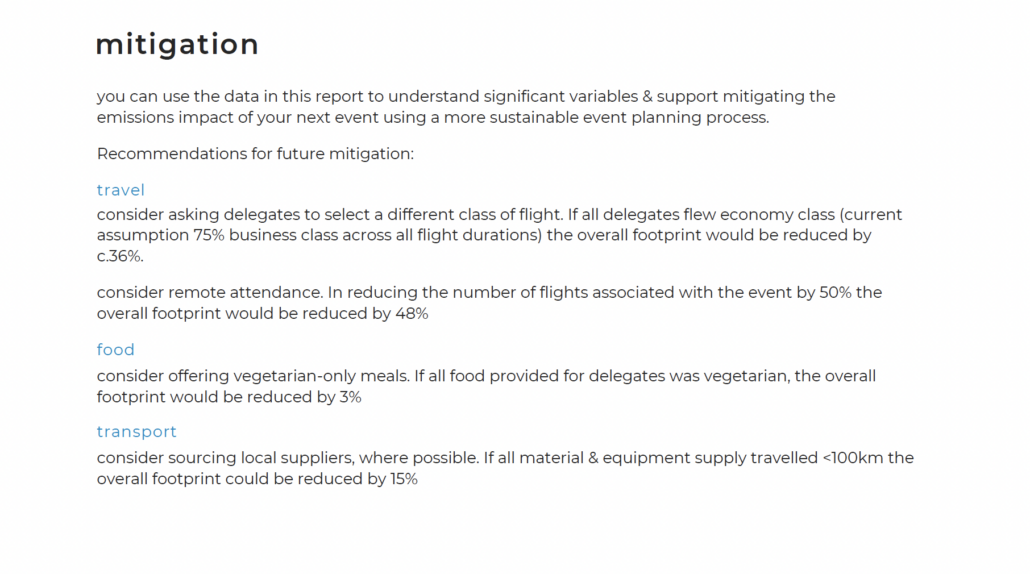
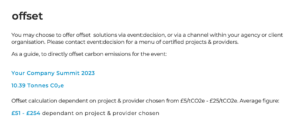
  4. Track by event:decision This allows event managers to measure an event’s carbon footprint by tracking either pre- or post-event, the emissions of travel, accommodation, F&B, materials, freight & energy associated with the event. The tool also provides recommendations on how to reduce the environmental impact of the event, a benchmark against other similar format events and the potential offset value.

The use of data and insight tools is an essential component of event managers’ success. Tools like those above – and many others – allow event managers to make data-driven decisions, measure the effectiveness of your events, gain a deeper understanding of their audiences, and measure and reduce the environmental impact of the event. With the right data and insights, you can create more engaging, sustainable, and successful events, resulting in increased ROI and more satisfied attendees.

To find out more about our data and insight tools for event planners purpose, track and predict – and how they can help event planners and owners measure and track whether they’re living up to their event objectives, get in touch.

https://eventdecision.com/wp-content/uploads/2023/01/11.jpg 768 1024 eventdec https://eventdecision.com/wp-content/uploads/2026/04/mainlogo-ed.png eventdec2023-01-31 07:10:422023-04-14 12:09:58The Critical Importance of Measurement for Event Planners
green-hushing

The dangers of green-hushing for events

January 2, 2023/in event:decision

The events industry is no stranger to the concept of greenwashing, or the act of promoting environmentally-friendly initiatives and practices in order to appear more sustainable, without actually taking any substantial steps towards sustainability. However, in recent years,  ‘green-hushing’ has emerged as a new and particularly dangerous form of greenwashing in events.

Green-hushing is the act of actively hiding or downplaying the environmental impact of an event, rather than promoting sustainability. This can take the form of not disclosing information about the carbon footprint of an event, not offering environmentally-friendly options for attendees, or simply not addressing sustainability at all.

While it may be tempting for events organisers to engage in green-hushing in order to cut costs or avoid criticism, the dangers of this practice are far-reaching.

Dangers of green-hushing

First and foremost, green-hushing is dishonest and deceptive. It misleads attendees and stakeholders into believing that an event is more sustainable than it actually is, and can damage the reputation of both the event and the industry as a whole. Trust is a critical component of any business relationship, and green-hushing undermines this trust by hiding important information and presenting a false image.

In addition to damaging reputation, green-hushing can also have negative financial consequences. As more and more consumers and businesses prioritise sustainability in their purchasing decisions, events that are not transparent about their environmental impact may face decreased attendance and sponsorship. This can lead to lost revenue and ultimately, financial harm for the event organisers.

Green-hushing also contributes to the larger problem of climate change and environmental degradation. By not addressing the environmental impact of an event, organisers are failing to take responsibility for their personal role in this global issue. This lack of responsibility not only perpetuates the problem, but also undermines the efforts of those in the industry who are working to make events more sustainable.

So, what can event organisers do to avoid green-hushing and ensure that their events are truly sustainable?

Three steps to avoid green-hushing

#1 Transparency is key. Event organisers should be open and honest about the environmental impact of their events, including the carbon footprint and any other relevant information. This not only helps to build trust with attendees and stakeholders, but it also allows organisers to identify areas where they can improve sustainability. Assessing the carbon footprint of any event at planning stage is now accessible to event organisers large and small through track from event:decision.

#2 Reduce environmental impact. Event organisers should make a concerted effort to reduce their environmental impact by implementing sustainable practices such as using eco-friendly materials, reducing waste, and offering sustainable transportation options for attendees. These practices not only help to minimise the environmental impact of the event, but they can also save money in the long run.

#3 Be proactive and promote. Finally, event organisers should be proactive in their efforts to promote sustainability. This can involve partnering with environmental organisations, educating attendees about sustainability, and offering incentives for those who take environmentally-friendly actions.

Green-hushing is a dangerous practice for the events industry. It undermines trust, can have negative financial consequences, and contributes to the larger problem of climate change. Event organisers who prioritise transparency, sustainability, and proactivity will not only do their part to protect the environment, but they will also position themselves as leaders in events.

To find out more about our carbon footprint and sustainability tool track, and how it can help plan and execute fully sustainable events, please get in touch.

https://eventdecision.com/wp-content/uploads/2023/01/Screenshot-2022-12-28-at-12.42.15.png 1384 1728 eventdec https://eventdecision.com/wp-content/uploads/2026/04/mainlogo-ed.png eventdec2023-01-02 08:36:452023-01-04 10:44:47The dangers of green-hushing for events

event:decision 2022 unwrapped

December 20, 2022/in event:decision

2022 has been quite a year for event:decision. This is what our year looks like unwrapped.

We reported and advised on event sustainability for 63 new agencies and brand customers.

data and insight for events

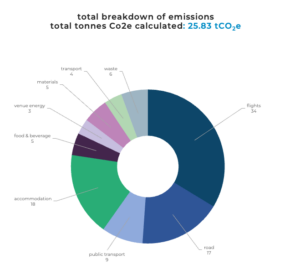
We measured the carbon footprint of heaps of events with our track tool, but some of our highlights included a luxury car launch in California, a jewellery show in Singapore and 90,000 people at London’s Battersea Park Fireworks Display!

The heaviest event we measured equates to the average European citizen’s annual footprint per delegate. The lightest event measured equates to the footprint of a pint of milk per delegate.

We supported brands, agencies, societies and associations. As well as exhibition owners and digital platforms.

We also supported all these events (plus a few more):

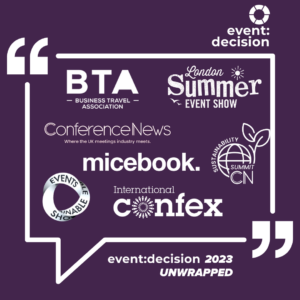
The Meetings Show, Conference News, Micebook, M&IT, London Summer Event Show,
Sustainable Events Show, International Confex, Digital Event News, Cvent Connect,
CN Sustainability Summit

data and insight for events

We were also proud sponsors of the industry leading Elevate Mentoring.

2022 was a year of launches for us. We launched purpose from event:decision which reports on company values. It’s the only tool for agencies to discover if they are the company that they say they are. It joins our carbon footprint and event sustainability tool track and our risk measurement tool predict. And lastly, we launched our sparkling new website and client portal.

We did all this without stepping on a plane!

So if you’ve been a part of our journey in 2022, thank you. We look forward to continuing to help you make better decisions in 2023 with our full suite of data and insight tools. If you’d like to talk to us about how we can help, please get in touch.

https://eventdecision.com/wp-content/uploads/2022/12/unwrapped.jpg 768 1024 eventdec https://eventdecision.com/wp-content/uploads/2026/04/mainlogo-ed.png eventdec2022-12-20 11:07:182023-02-15 09:12:01event:decision 2022 unwrapped
Page 9 of 9«‹789

More News

  • Beyond the big numbersJuly 7, 2026 - 12:42 pm
  • Hey venues! Buyers are losing faith in venues. Here’s how to win it back.July 1, 2026 - 2:19 pm
  • Credibility can’t be bought. But you can earn it.June 29, 2026 - 11:36 am
  • The Impact: suite now aligns every event decision with the UN SDGsJune 16, 2026 - 2:36 pm
  • The Average Event Leaves 100% of Social Value UnclaimedJune 11, 2026 - 2:08 pm
  • Exhibitor Benchmarking – recognise real effort.June 11, 2026 - 9:13 am
  • The client never asks….(which is why you should)June 2, 2026 - 2:59 pm
  • Zurich Convention Bureau partners with event:decisionMay 27, 2026 - 8:09 am
  • Bishop-McCann and event:decision to partner on making an Impact on US corporate eventsMay 27, 2026 - 7:56 am
  • The $260bn blind-spotMay 26, 2026 - 9:57 am
  • Is event planning a science or an art?May 25, 2026 - 6:59 pm
  • Answers to your own questions (yes, really…)May 18, 2026 - 2:52 pm
  • About Us
  • Partners
  • Resources
  • Client Login
  • Create An Account
  • Track
  • Impact
  • Navigator
  • Evolve
  • Tel: +44 (0)333 202 6985
  • Email: hello@eventdecision.com
© Copyright 2024 Event Decision | Privacy Policy | Website Design by Lemongrass Media
  • LinkedIn
  • Instagram
Scroll to top