event:decision
  • Home
  • Our Products
    • Track
    • Impact
    • Navigator
    • Evolve
  • About Us
    • Our Company
    • Clients
  • Resources
    • Quiz
    • Blog
    • Most Sustainable Agencies
  • Contact Us
  • Client Login
  • Search
  • Menu Menu
  • LinkedIn
  • Instagram

Eventprofs Hackathon Results

April 20, 2026/in event:decision, Impact, Third-party Content

Eventprofs Hackathon Results

By event:decision | April 2026

View the white paper here

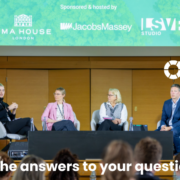
What happens when you put experienced event professionals under pressure? Not a panel discussion, but a realistic challenge with consequential decisions and trade-offs? That was the question event:decision set out to answer at the EIN Sustainability Lounge 2026, held at BMA House, London.

Eight teams of practising event professionals worked through a hackathon challenge. To plan the fictional ‘FinReach Global Launch’. A structured exercise requiring each team to design a major corporate event across six sequential decisions, each carrying cost and ESG consequences. The scenario: a values-led fintech brand, institutional investor scrutiny, and a global NGO threatening to publish a public review of delivery decisions. The results were striking.

Not a single team chose a traditional destination. The field is split between Nairobi and fully virtual, with teams prioritising either credible community proximity or carbon efficiency. On community representation, six of eight teams independently landed on the same split: 40% community delegates, 60% investors. On programme design, seven of eight rejected the traditional gala format entirely – choosing instead community co-design, impact ceremonies, and formats where the event’s narrative matched the brand’s mission.

The most significant finding came on social value verification. Every team, independently and without communication, chose the same approach: timely, light-touch independent verification published within 24 hours. Across six options, unanimous agreement by chance is statistically implausible. It reflects a latent professional consensus: that credibility requires independence, specificity, and timeliness.

The one notable blind spot was production. No team selected the most ESG-efficient option – cutting production to redirect savings – despite it also being the cheapest. Professional conditioning around production values appears to override both financial and environmental incentives simultaneously.

The conclusion is important: the events industry does not have a values problem. It has a framework problem. These professionals already understand what good looks like. They simply lack the tools to prove it.

The full white paper is available at eventdecision.com

https://eventdecision.com/wp-content/uploads/2026/04/hackathon-banner.png 600 1080 Matt Grey https://eventdecision.com/wp-content/uploads/2026/04/mainlogo-ed.png Matt Grey2026-04-20 08:11:292026-04-20 08:11:39Eventprofs Hackathon Results

Ten reasons why measurement gives better outcomes than certification

March 30, 2026/in Third-party Content

Why Measurement Beats Certification in Event Sustainability

Sustainability expectations in the events industry are rising fast. Clients, agencies and brands are no longer satisfied with policies, pledges or logos on a website. Increasingly, they want to know what actually happened at their event — and what difference their suppliers made.

That shift is why independent, event-level measurement is becoming commercially more powerful than self-certification alone. event:decision’s Impact Reviews provide credible, comparable insight into real event performance, delivering value that static credentials simply can’t.

Here are ten reasons why:

  1. Measurement turns sustainability from claims into proof, showing real outcomes rather than intentions.
  2. Measurement answers what buyers now ask for – measurable impact, not marketing statements.
  3. Measurement makes suppliers easier to select, feeding directly into agency and brand reporting requirements.
  4. Measurement reduces greenwashing risk, sharing responsibility through independent assessment.
  5. Measurement enables fair comparison, based on how suppliers perform in live events.
  6. Measurement supports preferred supplier status, encouraging repeat business and long-term relationships.
  7. Measurement shifts conversations away from the lowest price, helping suppliers justify quality and value.
  8. Measurement accelerates improvement, highlighting which actions genuinely reduce impact.
  9. Measurement aligns suppliers with agency and brand KPIs, supporting portfolio-wide ESG reporting.
  10. Measurement future-proofs businesses, preparing them for increasing scrutiny and regulation.

Certifications still matter, of course. They set the baseline. But on their own, they rarely differentiate or drive commercial advantage. Measurement does.

By participating in Impact Reviews, venues, hotels, agencies, production and AV providers move from saying the right things to demonstrating real performance. They become easier to buy, easier to recommend, and better positioned in a market that increasingly rewards evidence over assertion.

In today’s events industry, sustainability isn’t just about what you promise.

It’s about what you can prove.


https://eventdecision.com/wp-content/uploads/2026/03/measurement-beats-cert.png 600 1080 Matt Grey https://eventdecision.com/wp-content/uploads/2026/04/mainlogo-ed.png Matt Grey2026-03-30 11:11:392026-03-30 11:18:57Ten reasons why measurement gives better outcomes than certification

Putting ‘sustainability’ in a silo is costing you money (and clients)

January 28, 2026/in event:decision, Impact, Third-party Content


Putting ‘sustainability’ in a silo is costing you money (and clients)

For too long, sustainability has been treated like a side project. A report. A checklist. A post-event appendix that no one in sales ever reads.

And that’s exactly why it’s failing to deliver real value.

If sustainability lives in a silo, it doesn’t change decisions.
If it doesn’t change decisions, it doesn’t change outcomes.
And if it doesn’t change outcomes, it’s a cost, not a competitive advantage.

If ‘sustainability’ doesn’t change outcomes, frankly, what’s the point?

The uncomfortable truth: sustainability isn’t a “team issue”

The biggest mistake organisations make is assigning sustainability to one function and expecting it to magically influence the rest of the business.

Responsible and sustainable products and services are not owned by:

  • a sustainability lead
  • a post-event report
  • a compliance requirement

They are owned by:

  • Business owners
  • Heads of Events
  • Account Directors
  • New Business & Sales teams

Why? Because these roles shape strategy, design, budgets, supplier choices, and client conversations. That’s where sustainability either creates value – or disappears entirely.A

A global agency recently said, about a specific project, “the client hasn’t decided whether they’ll do sustainability or not“. Err, ok. Just what value is the agency adding here?

Sustainability that doesn’t win work is just overhead

Clients are no longer asking if events are responsible. They’re asking how, how much, and what impact it creates for them.

Yet many agencies and organisers still:

  • collect sustainability data after the event
  • store it in internal folders
  • never use it in pitches, renewals, or growth conversations

That’s wasted insight.

“Consumers now expect proof, not promises with the shift from “say you care” to “show your work.” says Julien Le Bas, SVP, Executive Creative Director & Global Head of Sustainability

If you deliver responsible and sustainable events, you should be using that proof to win more business – not hiding it in a dashboard no one sees.

Data changes the conversation – from cost to commercial value

When sustainability is embedded into commercial roles, something powerful happens:

  • Account teams can prove performance, not just promise intent
  • Sales teams can differentiate in competitive pitches
  • Event leaders can show progress year-on-year, not one-off gestures
  • Businesses can link responsible delivery to brand, risk, and ROI

But that only works if the data is clear, credible, and comparable.

This is where most event organisations get stuck

Even the best-intentioned teams struggle with:

  • inconsistent sustainability metrics
  • reports that aren’t client-ready
  • data that can’t be benchmarked or explained simply
  • insights that don’t translate into commercial stories

The result? Sustainability stays “our top priority”… but disconnected from growth.

Turning responsible delivery into a sales advantage

event:decision’s Impact Review tool is designed to break the silo.

It transforms responsible event performance into structured, ESG-aligned insights that business leaders, account directors and sales teams can actually use.

Not just to report – but to:

  • demonstrate responsible leadership to clients
  • support tenders and new business conversations
  • benchmark events across portfolios
  • show measurable improvement over time

In short: to win more work because you deliver better events.

Sustainability belongs where decisions are made

If sustainability only shows up at the end of the process, it will always be a cost.

When it’s embedded into:

  • how events are designed
  • how accounts are managed
  • how success is measured
  • how stories are told to clients

…it becomes a commercial asset.

Responsible and sustainable events are no longer optional.
But wasting the value of the data behind them absolutely is.

Stop putting sustainability in a silo.
Put it where it belongs: at the centre of your business growth strategy.

(If you’ve not twigged, Impact: Responsible Event Reviews do just that.)


https://eventdecision.com/wp-content/uploads/2026/01/Sustainbility-in-a-silo.png 768 1024 Matt Grey https://eventdecision.com/wp-content/uploads/2026/04/mainlogo-ed.png Matt Grey2026-01-28 12:21:422026-01-29 11:21:22Putting ‘sustainability’ in a silo is costing you money (and clients)

Impact: Responsible Event Review, Event Industry Update

October 4, 2024/in Impact, Third-party Content

Impact Review Q3 2024 event industry sustainability performance update

Oct 2024 in event:decision, Impact


The second of event:decision’s 2024 Impact updates on event industry sustainability performance brings you a summary of the state of sustainability.

Who are event:decision?

A team of EventProfs now providing data to over 200 event and agency brands. We provide proof points for responsible planning, by measuring the sustainable performance of your event. Our proprietary tools and services with which we support the industry, are:

  1. Track, event carbon audit & advisory services.
  2. Impact: Responsible Event Reviews provide ESG assessments, benchmarking and certification.
  3. Evolve, association, congress and exhibition sustainability services.

All three widely used by event brands and driven by commercial factors, by legislative demand and, dare we say, a moral imperative to deliver events ‘better’.


Industry Performance

The event:decision Impact tool quantifies event sustainability performance by the number of factors within each of Environmental, Social and Governance (ESG) that individual events and planners are actioning.

These statistics are the results of self-assessment by event owners, directors and producers, scoring if <30 factors across ESG are (1) being actioned (2) not being actioned or (3) not applicable to event type.

An audit on each submission is carried out to ensure that responses provided align with the nature of the event being delivered.

Here is where we stand across the event sector on ESG as a whole, from April to October 2024.


What does this mean?

Environmental factors actioned have fallen very slightly, from 61% actioned, on average, to 56% actioned. This is not a significant* reduction.

Social factors are consistently actioned at a lower level than environmental factors, but show a rise from 31% to 37% actioned, on average. No surprise given the relative youth of serious discussion regarding the social benefit of events in many areas of the event industry.

Governance (event organising processes) ranks the highest, as befits a professional industry at 66% at the end of Q3-2024.


Focus

We highlight some of the most noticeable factors, by virtue of being well-covered by planners, or the opposite of such, as defined by Impact: Responsible Event Reviews:

Environmental factors

  • Over 80% of planners state that they are reporting the carbon emissions related to their events. This appears high given data reported by major carbon calculators, potentially as users of Impact: Responsible Event Reviews demonstrate an appetite for sustainability inherent in their planning.
  • 3/4 planners consider F&B menus from an environmental perspective, demonstrating an awareness that menu-choices are a factor over which there is direct control.

Social factors

  • Diversity, Equity and Inclusion within an event is a factor considered by more planners than any other social factor.
  • Fewer than 1 in 4 planners are consciously measure the economic impact to the local area when planning an event.

Governance factors

  • Ensuring that event supply chain has relevant insurance cover is a top priority for planners in planning governance.
  • Being able to provide event-related emissions data to ESG analysts under environmental reporting regimes, both active and incoming, is a factor under consideration by only 4 in 10 planners.


How do we improve both Environmental and Social metrics?

Take a look at the ESG metrics under assessment within the event:decision Impact tool.

You can do so with no commitment or financial charge, simply by Creating A Profile on event:decision. After all, our aim is to support the transition of the event industry toward a more sustainable future.

There are other resources available, both free and paid, including the UN SDGs and an updated ISO for event planners in 2024-5. To understand and benchmark your own events, event:decision provides proof points for responsible planning, by measuring your event sustainability performance.

For more details about both Track (carbon) reporting, Impact (ESG) Assessments and Evolve (Exhibition and Association events) get in touch.

*(Significance at the 95% level for given SD and n)


https://eventdecision.com/wp-content/uploads/2024/10/1.png 768 1024 Matt Grey https://eventdecision.com/wp-content/uploads/2026/04/mainlogo-ed.png Matt Grey2024-10-04 07:45:132024-10-21 11:32:53Impact: Responsible Event Review, Event Industry Update
Page 2 of 212

More News

  • At last! A simple channel for food rescue…August 18, 2026 - 5:19 pm
  • What event planners can learn from Life Cycle AnalysesAugust 18, 2026 - 12:01 pm
  • Your performance data walks out the doorAugust 17, 2026 - 5:06 pm
  • Social Value is moving upstairsAugust 3, 2026 - 2:56 pm
  • Client gets the proof. You keep the intelligence.August 3, 2026 - 7:31 am
  • The Value You’re Already Creating (And Can’t See)July 29, 2026 - 9:14 am
  • We’re already doing these things…July 20, 2026 - 1:10 pm
  • Shout about your (social) value. beam Annual Forum 2026July 16, 2026 - 4:30 pm
  • The Global Destination Report Just Confirmed What We’ve Been Measuring All AlongJuly 13, 2026 - 3:19 pm
  • Beyond the big numbersJuly 7, 2026 - 12:42 pm
  • Hey venues! Buyers are losing faith in venues. Here’s how to win it back.July 1, 2026 - 2:19 pm
  • Credibility can’t be bought. But you can earn it.June 29, 2026 - 11:36 am
  • About Us
  • Partners
  • Resources
  • Client Login
  • Create An Account
  • Track
  • Impact
  • Navigator
  • Evolve
  • Tel: +44 (0)333 202 6985
  • Email: hello@eventdecision.com
© Copyright 2024 Event Decision | Privacy Policy | Website Design by Lemongrass Media
  • LinkedIn
  • Instagram
Scroll to top